
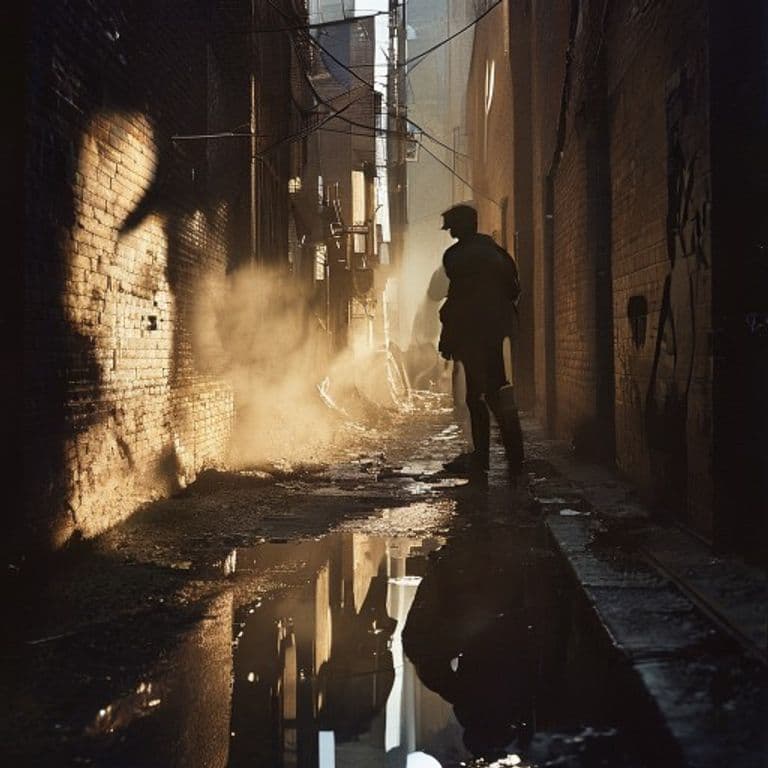
The city breathes in hues of steel and glass, yet it is light that truly defines its character. As dawn bleeds into the urban canyons, the first rays ignite the brutalist concrete, revealing textures previously hidden in shadow. This fleeting dance between luminescence and obscurity is the core subject for many who seek to capture the soul of the metropolis through analog means.
Analog photography, with its inherent tactility and organic rendering, becomes an ideal medium for this pursuit. Film doesn’t merely record light; it interprets it, embedding a warmth, a perceptible grain, and a dynamic range that digital sensors often strive to emulate but rarely replicate with the same raw honesty. It’s a dialogue with light, not just a transcription.
Consider the interplay of harsh mid-day sun against a reflective skyscraper, casting razor-sharp lines across a bustling plaza. Or the softened, diffused glow filtering through a grime-streaked window in a forgotten alleyway, illuminating dust motes dancing in the air. Each scenario presents a unique photographic challenge and an opportunity for profound visual storytelling, demanding a photographer’s discerning eye.
The street photographer, often a solitary figure, moves through this environment not just observing, but actively seeking these moments of transient beauty. They are hunters of light, patiently waiting for the sun to align, for a silhouette to emerge against a bright background, for the mundane to become magnificent through the alchemy of optics and emulsion. The choice of a rangefinder like a Leica M6 often facilitates this unobtrusive, intuitive capture, blending seamlessly into the urban flow.
Urban decay, too, finds new life through the analog lens. Peeling paint, rusted facades, and cracked pavements, often overlooked in the rush of daily life, gain a sculptural quality when bathed in the right light and rendered with the nuanced tones of a black and white film or the subtle color shifts of Portra. The patina of time becomes a testament, not just to neglect, but to enduring history and resilience.
There is a deliberate slowness to analog capture that mirrors the contemplative nature of truly seeing the city. Each click of the shutter, each advance of the film, is a conscious decision, an acknowledgment of the moment’s significance. This intentionality translates into images that often possess a timeless quality, divorcing them from the immediate digital stream and anchoring them in a more enduring visual narrative, a physical memory of a particular instant.
The grain, a natural artifact of the film process, adds a tactile layer, a subtle texture that speaks to the material reality of both the medium and the subject. It’s a whisper of the tangible world, inviting the viewer to lean closer, to feel the grit of the street, the cool touch of concrete, the palpable atmosphere.
The Artifact of Light
In a world saturated with ephemeral digital images, the analog print stands as an artifact, a physical manifestation of a captured instant. It demands attention, not just as an image, but as an object infused with the light and shadow it represents. It’s a dialogue between the urban environment and the photographer’s interpretation, preserved in silver halides and dye layers, carrying the weight of its creation.
Photography is not about the thing photographed. It’s about how that thing looks photographed.
As the acclaimed photographer Garry Winogrand once remarked, this sentiment resonates profoundly within urban analog photography, where the transformation of reality through the lens and film stock becomes the art itself.
The aesthetic choice of film stock plays a crucial role in this transformation. A Kodak Portra 400 might lend a soft, cinematic warmth to a sun-drenched street scene, emphasizing skin tones and subtle gradations. Conversely, a stark Ilford HP5 Plus could imbue a modernist building with a brooding, graphic intensity, highlighting architectural lines and deep shadows. This conscious selection is part of the art, shaping the emotional resonance and visual language of the final image.
Ultimately, the analog photographer working within the urban landscape does more than document. They perform an act of visual alchemy, turning the city’s fleeting moments of light and shadow into enduring poetry. They remind us that even amidst the relentless concrete jungle, profound beauty can be found in the subtle play of luminescence and obscurity, captured with a reverence for craft and material. It is a dedication to seeing, truly seeing, what often passes us by in the rush of contemporary life.