
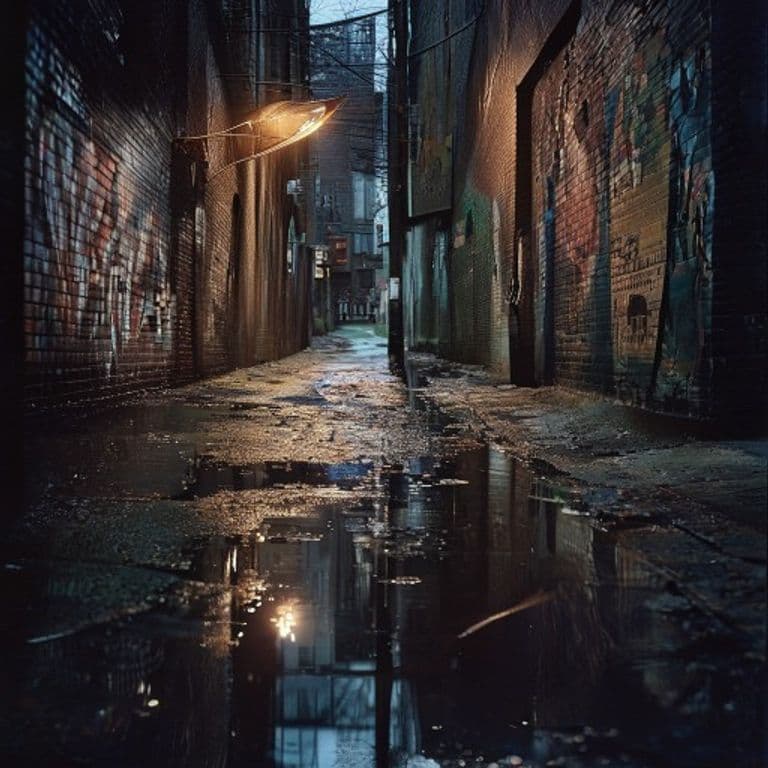
The humid air shifts, heavy with the scent of damp concrete and forgotten history, as one steps off the bustling main thoroughfare. Suddenly, the clamor of traffic recedes, replaced by an eerie quiet. This is the realm of the alleyway: a narrow canyon between buildings, an overlooked artery of the urban body.
Alleys exist in a constant state of liminality. They are conduits, shortcuts, and often, repositories for the city’s discarded memories. They are not designed for grand statements but for utility, privacy, and the quiet transactions of daily life that refuse the public gaze. These spaces are where the city breathes a different air, a more intimate, unfiltered breath.
For the photographer, these forgotten spaces offer a rich tapestry of visual opportunity. The play of light, filtered and diffused by towering walls, paints stark geometries and subtle gradients across their surfaces. Shadows deepen, revealing textures that the brighter, wider streets often flatten into uniformity: peeling paint, rough brickwork, the enduring patina of time on metal fire escapes and rusty grates.
Graffiti here transcends mere vandalism; it is a layered conversation, a visual palimpsest. Every tag, every mural, every faded poster whispers of presence, protest, or momentary declaration. These are the unsanctioned galleries of the urban subconscious, constantly evolving, constantly overwritten.
Analog photography finds its natural home within these raw, often brutalist confines. The inherent grain of film, especially a medium-speed stock like Kodak Portra 400 or FujiFilm Superia 200, imbues these scenes with a genuine rawness, a textural depth that digital sensors often strive to emulate but rarely achieve with the same organic feel.
The dynamic range of film allows for a nuanced rendering of light and shadow, crucial in these often dimly lit passages. Whether it’s the melancholic blues of twilight in an alley or the warm, dusty hues of midday sun finding its way down a sliver of wall, the film becomes a silent collaborator, emphasizing the transient nature of light.
Beyond the purely aesthetic, alleys are rich with implied narratives. A discarded single shoe, a lone chair facing a graffiti-scarred wall, a child’s forgotten toy partially obscured by debris – each artifact suggests a story, a moment that unfolded beyond the public eye. These are the scenes that invite conjecture, quiet contemplation, and a profound sense of empathy.
The human element is often physically absent yet profoundly felt. Footprints on a wet pavement, a faint cigarette butt pressed into a crack, the worn-smooth handle of a service door – these are the fleeting traces of lives lived, moments passed. The alley holds these secrets, preserving them in its quiet, unassuming embrace.
The photographer venturing into these urban veins adopts a particular mindset. It requires an active seeking of the mundane, a belief that beauty isn’t always overt or grand. It resides in the overlooked, the discarded, the imperfect – a beauty found in resilience, in the way life and entropy continue to assert themselves amidst decay and neglect.
This pursuit is less about documenting specific events and more about capturing an atmosphere, a feeling. It’s about revealing the character of a place that is often ignored, celebrated only by those who actively choose to seek it out.
“The city is not a concrete jungle, it is a human zoo.”
Desmond Morris
While Desmond Morris’s observation points to a different kind of urban confinement, it resonates with the idea that alleys are zones where human activity, raw and unadorned, is often laid bare. They are the stage for everyday dramas, unscripted and untheatrical.
Exploring an alley is an act of deliberate observation, a refusal to accept the prescribed paths and sanitized narratives of the city’s main arteries. It’s a search for authenticity, for the unfiltered pulse of urban existence away from the polished facades and curated experiences presented to the wider world.
In a world increasingly sanitized, documented, and presented through filtered lenses, the alleyway remains a bastion of unexpected discovery. It challenges us to look closer, to listen more intently to the silent narratives etched into its walls and pathways. It reminds us that every city has a hidden soul, a complex, layered reality waiting to be seen and understood.