
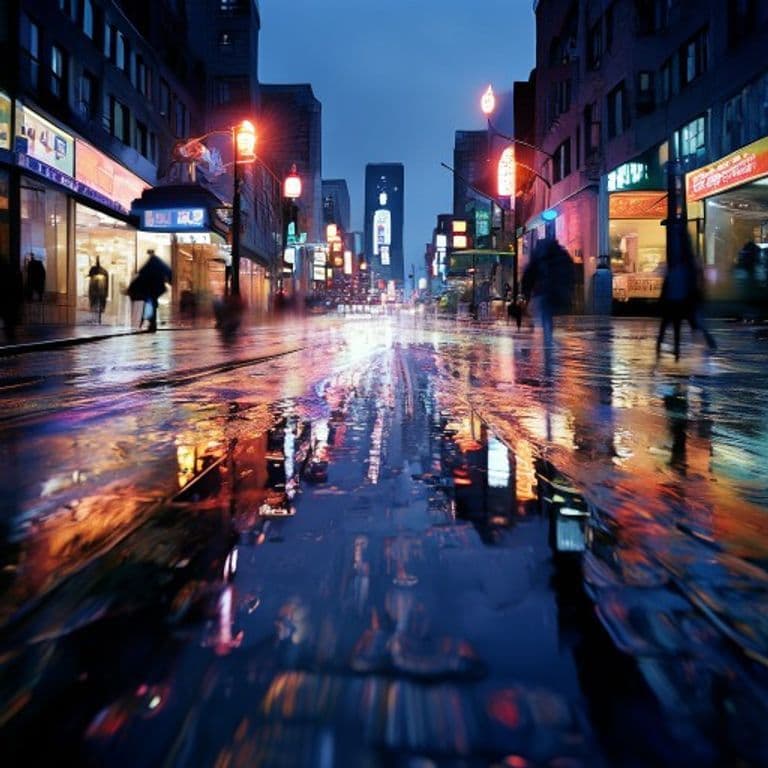
The city, moments after a downpour, undergoes a profound metamorphosis. What was solid pavement becomes a vast, shimmering canvas, mirroring the sky and distorting the urban fabric into liquid abstractions. It’s a fleeting theatre, a grand, unsolicited exhibition.
Rain transforms the utilitarian grey into a dark, reflective surface that swallows light and casts it back, transmuted. Streetlights bloom into ethereal streaks, neon signs bleed their vibrant hues across the asphalt, and the sharp geometry of buildings dissolves into undulating forms. These are not mere puddles; they are transient portals.
The ground beneath our feet becomes a second sky, a subterranean cosmos where familiar elements are rendered alien and beautiful. Each ripple from a passing car or a falling drop disrupts this delicate illusion, asserting the moment’s ephemerality.
The Analog Gaze on Liquid Light
For the analog photographer, these wet cityscapes offer a compelling subject. The inherent characteristics of film — its grain, its nuanced dynamic range, its capacity to render light with a certain organic quality — lend themselves exquisitely to capturing the liquid dance of reflections. The tactile process of loading film, winding the camera, and anticipating the developing process adds another layer to the creative act.
There is a deliberate slowness to analog practice that aligns perfectly with observing such transient phenomena. The photographer is compelled to pause, to truly see the interplay of light and water, rather than merely document it. This mindful approach often yields images imbued with a deeper sense of presence and atmosphere, fostering a connection to the moment that digital immediacy sometimes bypasses.
Film stock choice becomes crucial. A high-contrast black and white might accentuate the stark geometry and light streaks, transforming the scene into a graphic play of light and shadow. Conversely, a warmer color film like Kodak Portra could enhance the subtle shifts in urban neon and ambient glow, imparting a nostalgic, almost painterly quality to the scene, preserving the mood of that specific, damp evening.
“Photography is a way of feeling, of touching, of loving. What you have caught on film is captured forever… It remembers little things, long after you have forgotten everything.”
— Aaron Siskind
Siskind’s words resonate deeply when considering these fleeting urban mirrors. The analog photograph isn’t just a record; it’s a tangible memory, a preserved whisper of a moment that has since dissolved. Each click of the shutter becomes an act of deliberate remembrance against the ceaseless flow of the city.
Ephemerality and Urban Poetry
These reflective surfaces are more than just optical illusions; they are potent symbols of urban ephemerality. The city itself, ever-changing, ever-evolving, finds a momentary, tangible metaphor in these fleeting liquid mirrors.
What we observe is a constant negotiation between reality and its spectral twin. A lone figure walking past becomes two, one grounded, the other an inverted, watery ghost. The ordinary concrete takes on the luminosity of polished obsidian. It’s a brief, unscripted ballet of light and form that speaks to the transient beauty found within the urban mundane.
Consider the fragmented narratives offered by these reflections. A glimpse of a distant skyscraper, warped and elongated. The fiery glow of a bus brake light, stretched into a painterly stroke. A solitary pedestrian’s umbrella, a dark bloom against the luminous street.
Each frame captured is a unique event, never to be precisely replicated. The angle of light, the intensity of the rain, the movement of the street – all conspire to create a singular composition that exists for only moments before receding into memory and photographic emulsion.
The wet city street, therefore, is not merely a surface to be traversed; it is a profound visual text, constantly rewriting itself. To engage with it photographically, particularly through the deliberate medium of analog film, is to participate in a quiet act of urban alchemy. It’s to transform the commonplace into something transcendent, capturing the liquid soul of the city before it evaporates with the rising sun.