
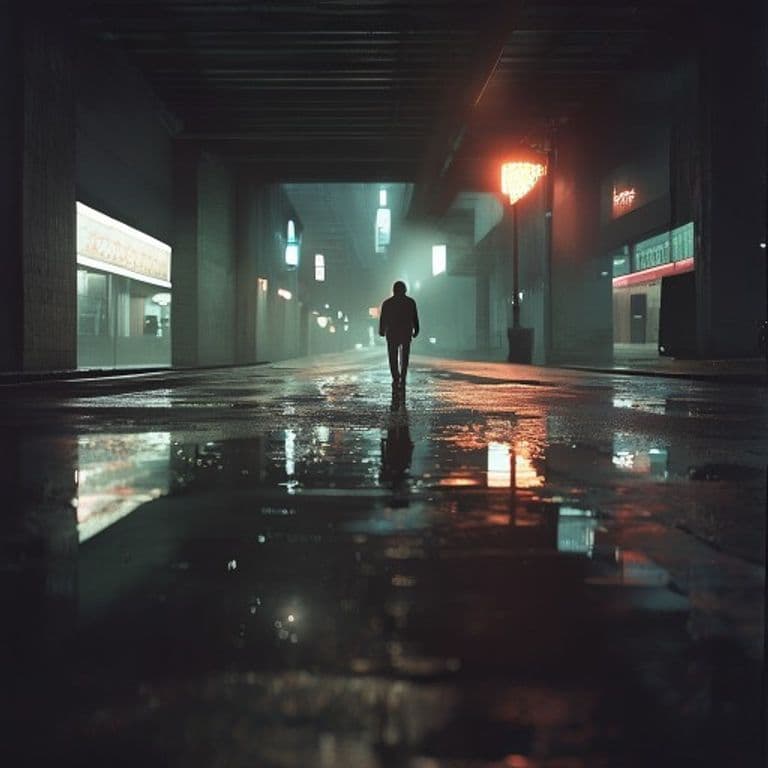
The bus stop shelter, slick with recent rain, reflects the neon bleed of a distant sign. Figures move like ghosts through the twilight haze, their faces obscured, their hurried steps echoing the city’s restless pulse. This isn’t a destination, but a pause; a liminal breath between departure and arrival.
It is in these interstitial urban spaces—underpasses, forgotten corners, deserted transit hubs—that the truest character of a city often reveals itself. Not in grand monuments, but in the quiet, overlooked textures of everyday transition.
Analog photography, with its inherent tactility and deliberate process, possesses a unique affinity for these realms. Unlike the clinical precision of digital, film embraces imperfection, rendering the fleeting moment with a depth and emotional resonance that feels both timeless and deeply personal.
The Texture of Time: Grain, Light, and Form
A roll of Kodak Portra 400, for instance, doesn’t just record light; it interprets it. Its characteristic warm tones and fine grain soften the harshness of concrete, transforming stark shadows into gradients of memory. The scene becomes less about mere documentation and more about felt experience.
Consider a medium format camera, a Hasselblad or a Rolleiflex, pressed against the chest. The slower pace, the careful framing, the single click of the shutter—each action a conscious commitment. This deliberate approach fosters an engagement with the subject that digital rapid-fire often bypasses.
Urban decay, peeling posters, the worn patina on a brick wall—these elements are not blemishes but narratives waiting to be unearthed. Film’s dynamic range often excels in capturing the subtle shifts in luminosity across such surfaces, revealing stories embedded in the city’s skin.
Beyond Resolution: The Soul of the Image
The magic lies not in pixels, but in silver halides. The inherent grain structure of film, whether the subtle texture of Fuji Pro 400H or the robust grit of Ilford HP5 Plus, adds an almost painterly quality. It’s a visual hum, an atmospheric layer that enhances the sense of realism while simultaneously abstracting it.
Photographers like Saul Leiter found poetry in the mundane, using color film to capture reflections and layered compositions that transcended simple street scenes. His work exemplifies how film can distill complex visual information into eloquent statements about urban life.
The anticipation of developing a roll, the tangible wait, fosters a different relationship with the captured image. It’s a physical manifestation of memory, a unique print that carries the weight of its creation, far removed from the instant gratification of a screen.
To seek out liminal spaces with an analog camera is to embark on a quest for authenticity. It is to find beauty in the overlooked, meaning in the transitory, and a deep connection to the city’s pulse through the chemical alchemy of light and silver.
The result is not just a photograph, but an artifact—a quiet testament to the enduring power of film to reveal the profound amidst the peripheral, etching the elusive spirit of urban liminality into tangible form.